Hi All,

Finally a
chance to sit down and write another blog. It’s been a while and what a season
we have had. Record breaking temperatures and the benefit of a full irrigation
system in a year described as the hottest in 500 years.
I know
from our data the green performance has been higher this season compared to the
last five years and with the benefit of the investment made by the club we
managed (at a cost) to keep grass coverage on the fairways and playing
surfaces. I have no doubt we would have been in the same situation as we were
in 2018 if we hadn’t installed the irrigation system.
 |
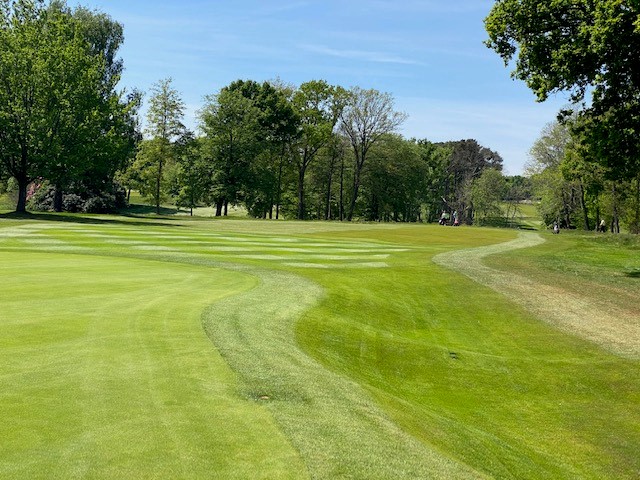
| 11th Hole 26th October 2018 |
 |
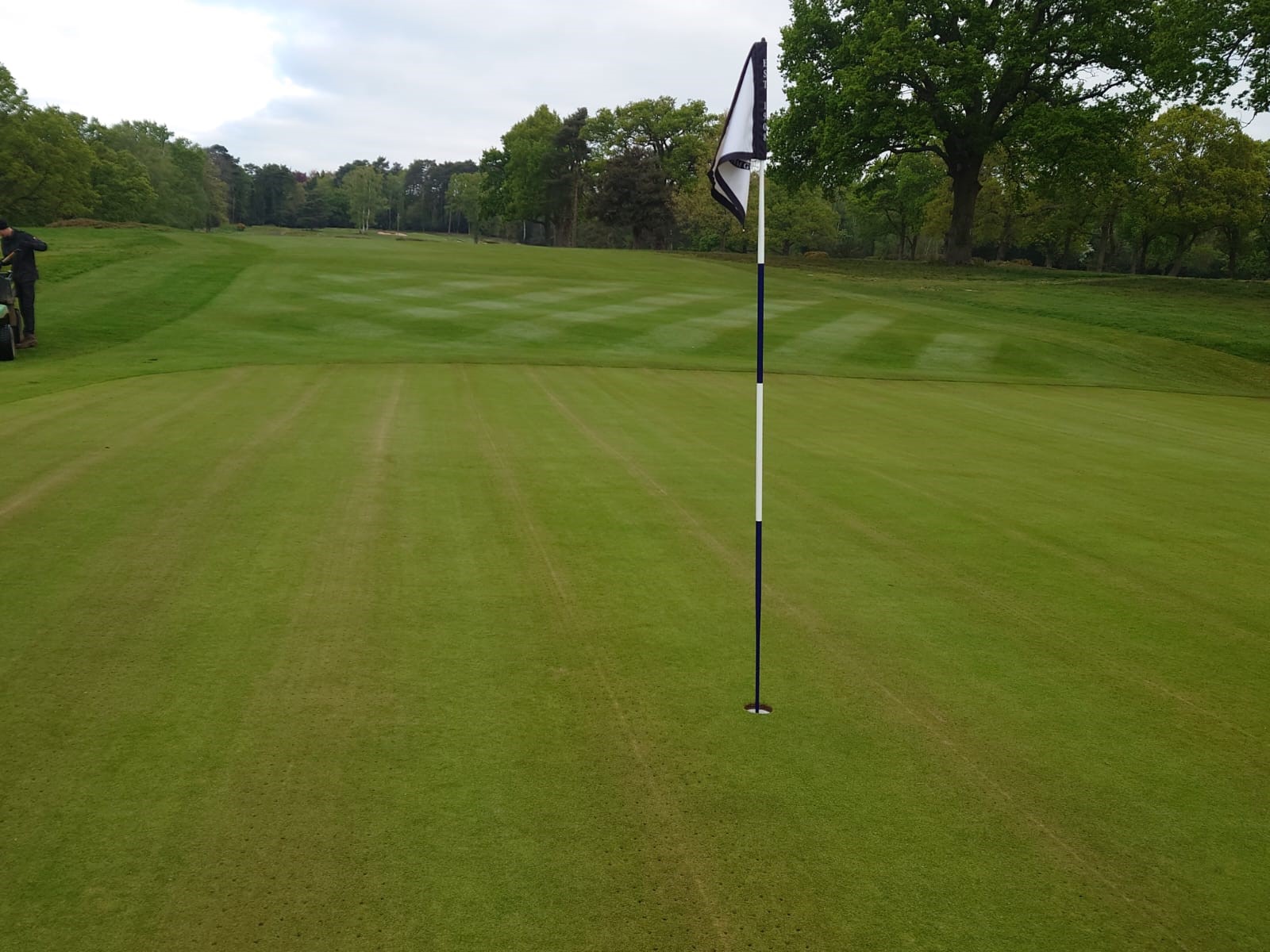
| 11th Hole 26th October 2022 |
If we look
back at 2018 I can remember the huge sums of money needed to repair the course
and the months of work to get some kind establishment back. I don’t think the
fairways fully recovered until 2020. Again after lots of hollow coring, over
seeding, staff hours and patience from the membership.
So the good news our insurance policy against the drought was needed this year and the irrigation system has us going into winter in a better place than in previous years.
Now we
face Mother Nature ‘levelling things up’ this was always going to happen after
a relatively dry winter last year and drought summer. We are still a long way
off our yearly rainfall average with only 601mm falling year to date and our
yearly average at 900mm, with September recording 97mm, October 91mm and
November so far (11/11/22) up to 107mm of rain so far. That’s nearly half the
yearly rainfall falling in the last nine weeks. If I was a betting man I would expect
us to be finish the year around 850mm meaning another 249mm of rain between now
and the end of December. That’s a lot of water and something that will become
more common as the climate changes.
Course Closures
The impact from all of this rain has meant the course has
become saturated at times and slippery in areas meaning walking around safely
can be an issue. At this time we have to make call and sometimes this means the
course will be closed.
Like in any other sports like Football, Cricket, Tennis and even Rugby (my son had a game called off just last week as there was a risk of drowning… yes drowning as players end up under one another with their face in the water laying on the pitch). This is only a problem in golf for those that lay on the greens to line up the putts but sometimes we need to make a call on safety and that’s final. When this happens we move the staff onto areas they can work or catch up on jobs back at the workshop and around the clubhouse or even in the ditches to help drainage flow. Safety must and always comes first.

We will also use our agronomic qualifications and
understanding of site when looking at implementing closures, winter mats or trolley
bans. How much damage can we sustain? How much will this cost to rectify? Will
this damage be recovered in time for the main golfing season? This and so many
more thoughts as we make a decision.
I can promise you that any course closure is the last thing
we want to do, as greenkeepers we would love to have the summer months all year
round and have no issues with course conditions but we are in the UK and our
weather patterns are varied. Further
north of us most of the countries end up with snow cover being the natural course
closures, some for several months. Below us the weather patterns a lower altitudes
tend to be drier or similar to us and even nearer the equator hugely different
with completely different grass species.
Even locally there are huge differences from north to south,
east to west, especially rainfall and temperatures with the west being normally
hit the hardest rainfall wise and the east bone dry and struggling with high
temps and if we break this down even more locally we see huge differences between
Parkstone, Hayling and even Corhampton to us rainfall wise.
I remember Charlie (greenkeeper here for 44 years, who
worked with Pete Marsh who worked 50 years at the club) telling me “it doesn’t rain
here in the summer”, do you know what, he was right!
We would watch daily radars tracking in and moving around
the Isle of Wight and splitting towards Parkstone and Hayling. We have low
levels of rainfall compared to the other sites but as the direction of the jet
stream moves for winter we get the rainfall. The beauty now is we can all see
each other’s weather stations but that’s not all to the puzzle and we
understand that.
The soils
Perhaps the biggest difference locally are the soils and
these make a huge difference. Clubs perceived similar terrain wise and nothing
like us. Hockley and the Winchester Courses are on chalk with the other
Heathland Courses like Parkstone, Ferndown, North Hants, Liphook and Broadstone
all on sand. Hayling as we know is a links course on sand and gravel so it couldn’t
be more different.
At Stoneham we are on London Clay, 150 meters deep pure
clay, this gives us an advantage in the summer months of staying greener longer
meaning we require less irrigation to maintain a good coverage compared to
those on sand. This summer has been hard year on those courses as the required
amounts of water to keep them fully alive against taking into account
evaporation was almost impossible.
However during the winter months those table turn to them having the advantage, especially if we have a lot of rain days
Rain days
What do I mean by rain days? Well not the amounts of
rainfall, like I have been talking about above but the amount of rain days.
Days or hours which allow for drying down times. The beauty of our new soil
scout technologies in the greens means we can track a greens performance in the
summer for play and its decline to un-playable in the winter and back to
playable with hard data to back this up.
We have just recently, since the 22nd October gone through
a very wet period, especially from the 1st November with one dry day
out of seventeen days. Meaning the drainage has been working but this cannot
cope with the level of rainfall and no drying time. It felt relentless for the greenstaff
on the course.
 |
| soil scout sensor in 18th green showing heavy rainfall and dry downs highs of 56% |
The 18th Green shown here, shows all the heavy rainfall patterns coming in over the start of November. You can see immediately when the rain stops and the greens go from a very scary 50+% moisture content, which is completely flooded and then saturated to a point of drying down. The speed of the drain down has improved significantly since we have added drainage but this must not be mistaken for a sand based USGA green.
 |
| The sand based short game green showing under 20% moisture |
A bit of History
Greens from the early 1900’s were designed and made from
the local soils, with a lot of the better courses actually clay lining the
greens even if they were on sand to hold water in the winter. Stoneham had an
abundance of clay and it was this clay that was used. Again another issue is
not all greens have been made the same like now in the modern era, all greens
profiles are made the exact same way. This gives consistency when dealing with
moisture and is easier to manage.
Stoneham like most from before the 1990’s were typical old
clay push up greens designed to hold water in the winter as irrigation systems didn’t
really get going until the 1970s.
Golfs history for the inland courses would normally be played in the summer months and on a links in the winter months. Now we tend to play all our golf at one course and are making changes to these courses to allow them to be played all year round.
Our recent drainage works in the greens has now given us an
outlet and overflow for a bath if you like and will cope with rainfall, as long
as we get a break to allow it to work. When comparing it with sand based short
game area green which doesn’t really change, you can see how far apart these
are in the winter but the cost of renovating all greens to a sand based green
would be in the millions now and completely unachievable and something I am not
sure I would want to do. We have fantastic greens and great complexes which are
a challenge and can catch you out, such amazing design work by Willie Park 114
years ago.
 |
| 12th Greens drainage |
 |
| 13th greens drainage |
Talking of drainage, we have finished hopefully our last
two greens to be drained with the rope system. You will have noticed the 12th
and 13th have been done in the middle of October and are recovering
well. We have cored the drain lines twice and would normally go again before
the season starts again to help smoothness. This now means we have drainage in
all greens except the 7th and 16th. These have been left
as they have a higher sand content or sit very firm all year round and our data
is showing they aren’t a concern at the moment.
In the future we may need to add a secondary or third type
of drainage system to get the greens to perform even better. This maybe sand or
gravel banding. Meaning small slits across the greens back filled with sand or
stone. This is being monitored daily now.
This now means some of the greens 5th, 13th,
14th, 17th have pipe drainage and rope in them with the 1st
and the 10th also having gulley points in them along with the rope drainage.
The investment means quicker dry down times, meaning we can
get the course back into play quicker, even though sometimes it might not feel
like that, it could actually have been worse.
The club have recently placed an order for our own drainage
trencher which will allow us to continue installing drainage in the worst areas
around the course in house giving us flexibility to do this at the right times.
Watch this space for updates!
Going forward
 |
| Winter Mat trial 2022 |
You will also notice we have a mat out on one of the Par 3’s. This will be moved from hole to hole
to give you all a go at various length shots for feedback. Finding a mat that fulfils
all of our needs is hard. Some like to put tees in them or to play from the
deck, some like them firm, some soft and we like them light enough we can move
them around the tees to spread the wear.
Our long term aim and something we are working with golf
architect James Edwards of EDI on is new teeing areas. Areas that are fit for
purpose of a modern club. Big enough to cope with winter golf meaning no mats
are required. WHS compliant, free draining and away from shade issues and with an
option for a variety in shots from various tees fitting for the standard of player.
We hope to be able to show something on this soon but for
now we only have 0.6 ha of tees compared to the minimum requirement for the modern
game being 1.5ha of teeing ground. Another example of how the game has moved on
since its original design. Until then we may need to add winter mats on tees to
cope with the lack of recovery or during particularly wet periods.
Please let us know your thoughts on this mat as we plan to
get others made if the majority approve.

The club held an Open consultation evening for the reservoir project on Wednesday 9th November evening with members and local residents dropping into to see the plans and talk to the team behind the plans. This seemed madness but also correct to be talking about water harvesting from the course when we had been closed in the run up to it. Please take a look at the plans in the clubhouse if you get chance. Water is going to be a big talking point for our industry in the future and being more sustainable can only be the right thing to do.
Conclusion
The investments in pathways, bunker liners and drainage on greens and fairways allow us to recover heavy rain periods in a much better state than ever before and course closures are always the last resort and we asked for your patience during these times. We know we aren’t perfect and we know Stoneham is on a heavy clay. A site that gives us the beauty in the spring and summer months we all enjoy.
We must ensure the game can be played in a safe manner on a safe course and minimising the impact and damage to the course. We must remember damage now does need to be paid for and we need time to recover. The level of both of these is down to how we treat the course now.
 |
| Roping off of areas around 3rd green |
You will see we have added ropes for those that need a trolley to follow and allow us to
protect the most vulnerable areas.
Please follow these with a trolley at all times. Please if you can make every effort to carry your bag if you can.
A small bag with a
few clubs can be great fun and means you walk less distance. These small things
like this protect your course.
That's enough from me, I've taken up too much of your time already. Let’s hope I am wrong about the rainfall predictions and we go into a lovely frosty (we need the leaves down to tidy them up) sunny spell… Back to clearing leaves.
Until
then take care and see you soon!
Matt